

30Jun1:49 pmEST
You Come to Expect the Fight
Despite Treasuries topping out during the pandemic (which means rates on the long end of the curve bottomed) we still have not yet seen a classic panic/washout bottom in the bond market.
Bond bulls remain steadfast that a new bull market in bonds is just around the corner, either due to money leaving equities and commodities during a deflationary recession or, instead, due to a goldilocks scenario where the economy smooths out and rates come back down naturally--Either one will suffice for bond bulls.
Indeed, after forty-plus years of rates constantly reverting lower, one cannot help but understand that bond bulls will continue to latch onto this view until decisively proven otherwise, which would likely come in the form of an outright bond market crash (TLT crashing) with rates spiking higher on the long end in a way we have not seen in at least two generations.
The conventional wisdom seems to be that "they" will not let rates go much higher from here due to government debt levels off the charts, which sounds an awful lot like housing bulls in 2005 saying that "they" would never let home prices meaningfully fall again due to how much risk was in the system (MBS, CDS, etc.). And if there is one lesson markets teach us throughout history, it is that whichever scenario seems like it simply cannot afford to happen, most likely will happen in due time.
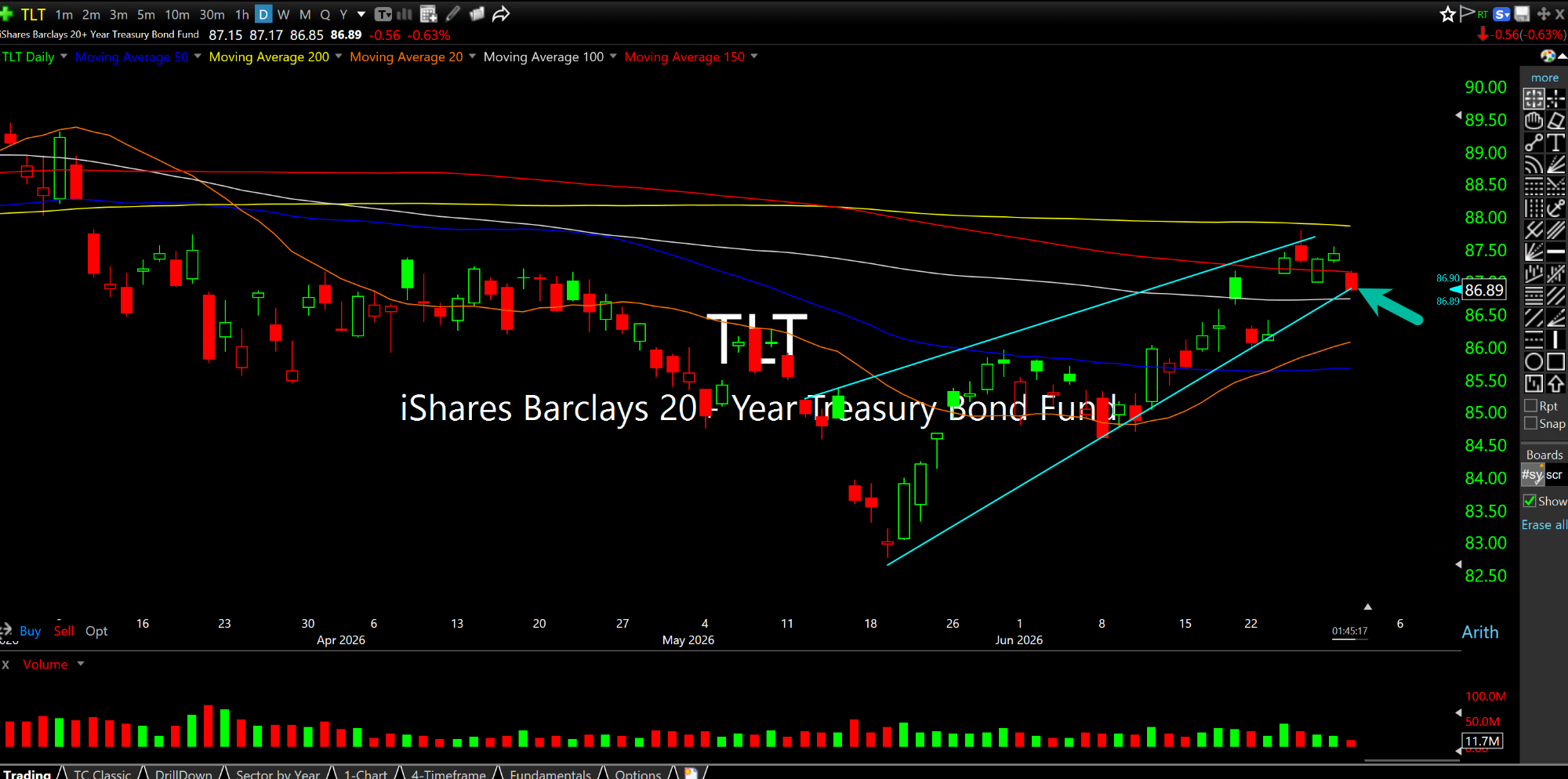
On the updated TLT daily chart, below, Treasuries have been meandering higher in a wedge since May, giving bond bulls hope that Kevin Warsh may not be nearly as hawkish as some seem to think. Currently, the odds of a rate hike by September suggest at least one is now more probable than not.
In lieu of harping on the short-term bounce, I still take the long-term view that Treasuries remain in a bear market, with risk of breaking meaningfully lower as rates rise. A rising wedge up to a declining 200-day moving average is not a particularly bullish setup, in my view. And I suspect bond bulls are desperate and reaching.
Ultimately, rates on the 10-Year will need to push back up to 5% to scare the White House and Fed into making some type of panicked move, be it yield curve control or the like. But if that is the pressure point, then it is still more likely than not we test it out sometime this year.